|
|

楼主 |
发表于 2015-1-13 17:51:56
|
显示全部楼层
来自: 中国北京
本帖最后由 gongwen0519 于 2015-1-14 01:11 编辑
9 d) W+ K0 I f: j# _& d3 }. v) D5 N
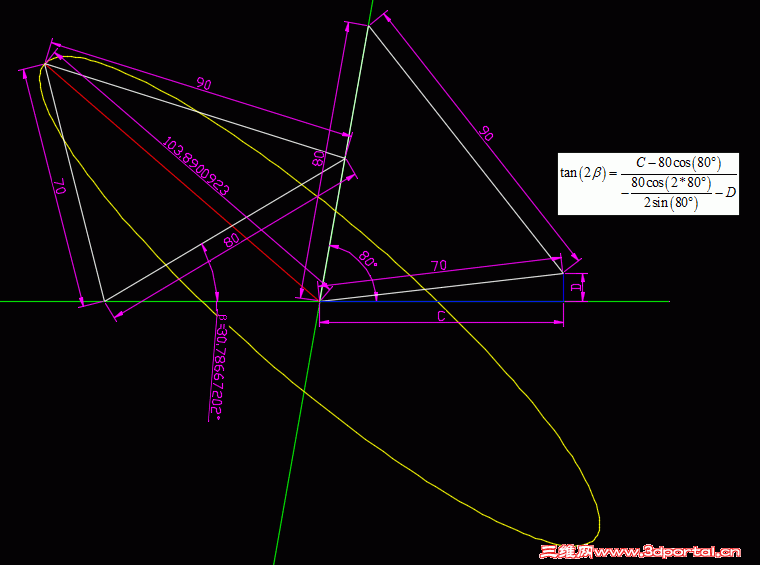
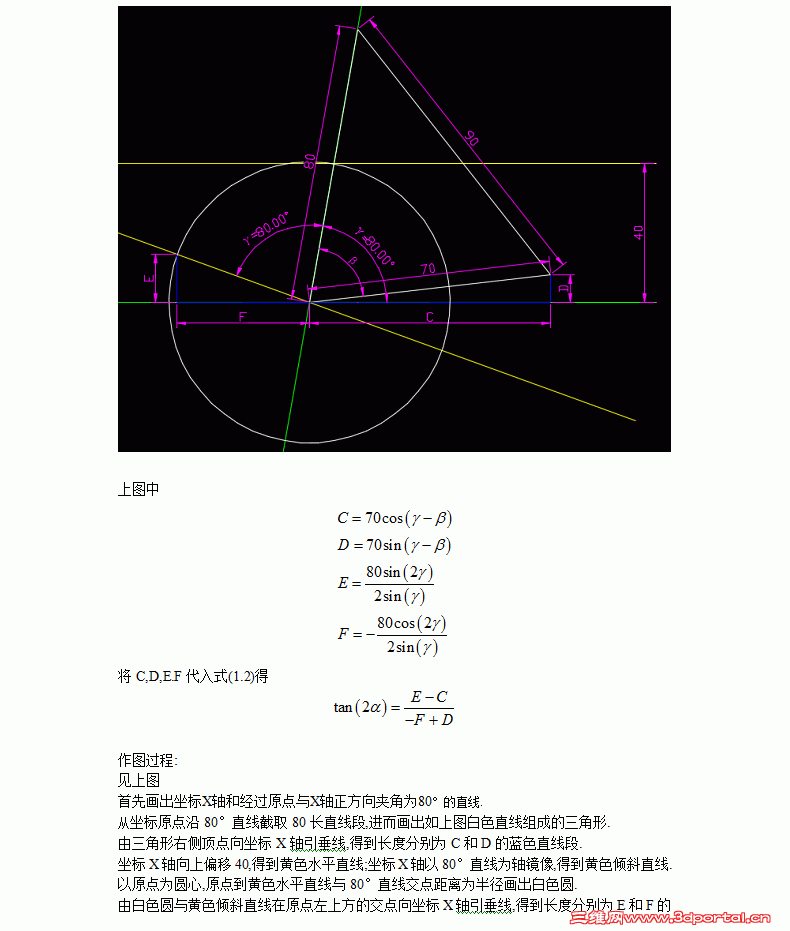
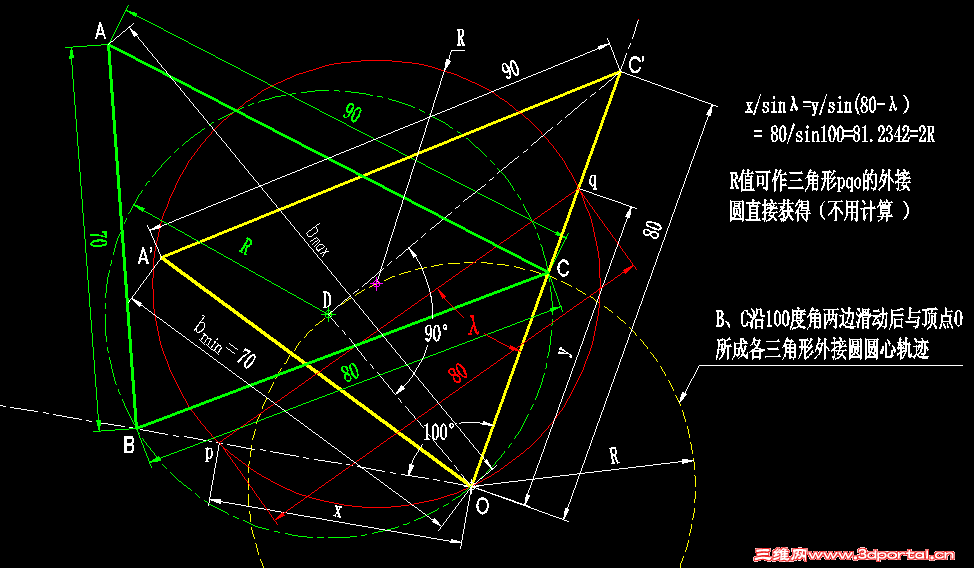
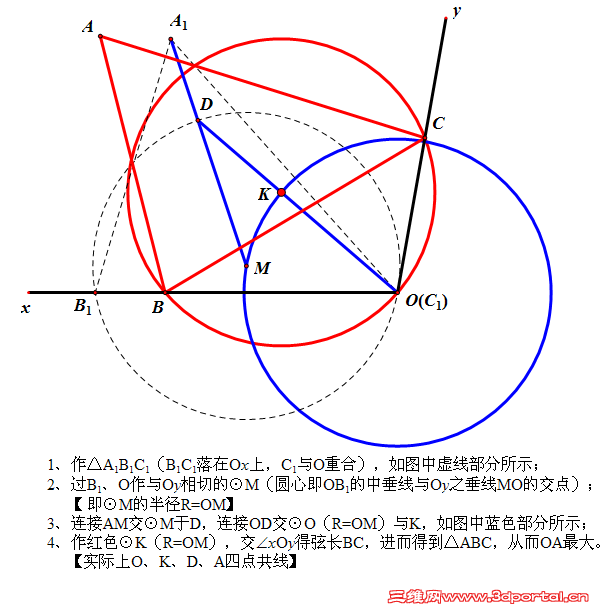
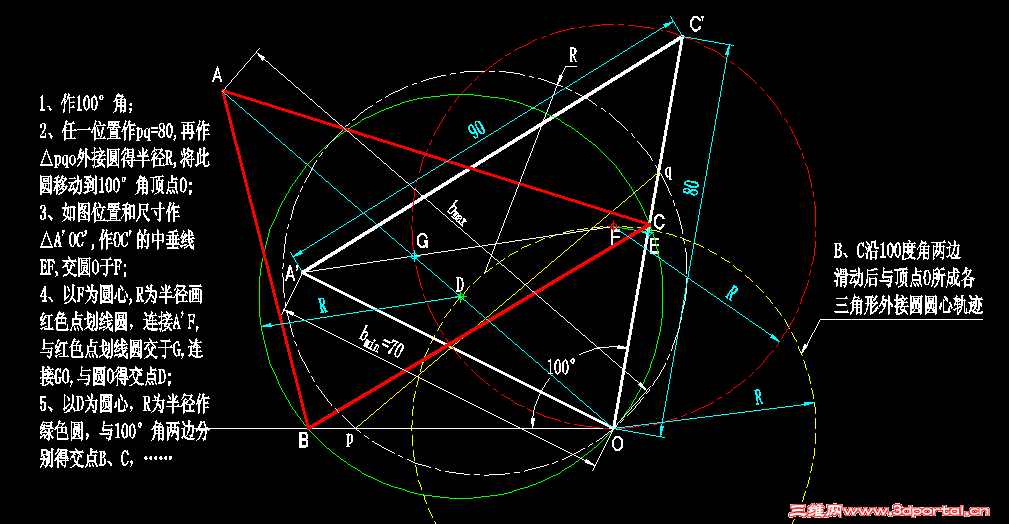
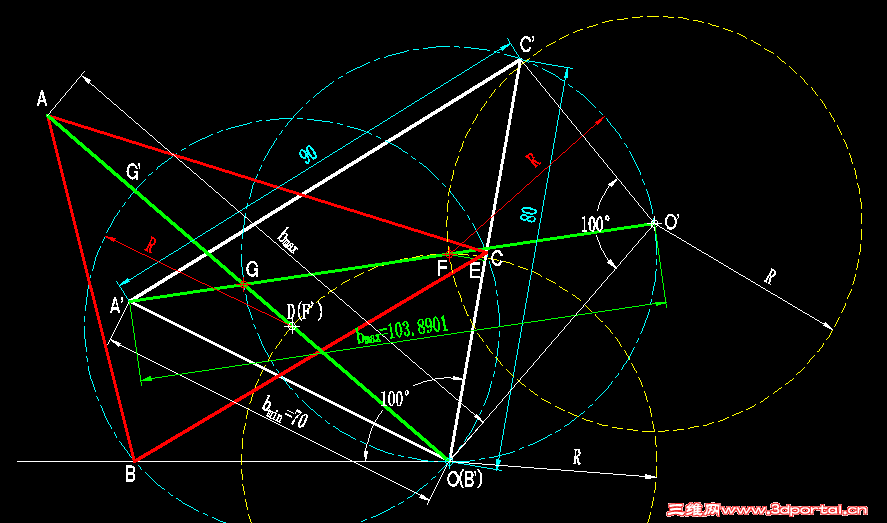
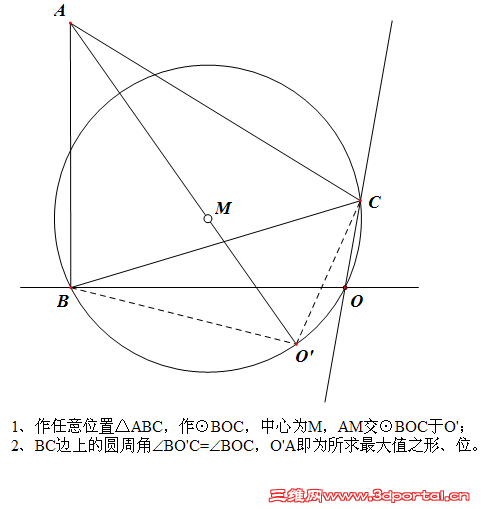
, U$ c3 w4 @3 g0 K# o8 n5 ]woaishuijia版主的作法还得细细咀嚼,oxm44先生的轨迹分析正确(但结果不正确),楼主摸索整出的纯尺规几何作图方法如下:9 R5 K6 |! A$ d8 Q/ U( a' L
! {# x" s" d$ ~9 P# L作图步骤:
+ L1 }- [, F- b/ N5 ]) ~ s* Y* k
+ h# d5 ~, I: A( x$ L
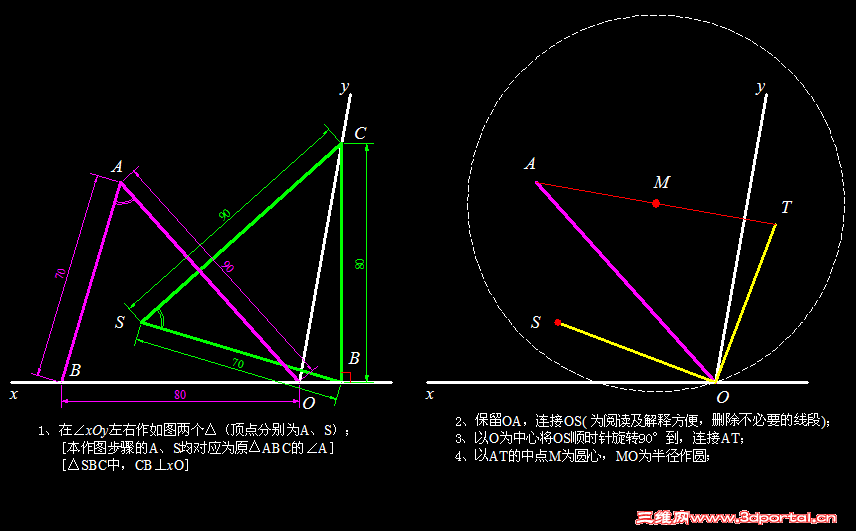
, @/ k4 v8 x$ T7 h! L6 M第3步:3、以O为中心将OS顺时针旋转90°到OT,连接AT;(漏掉了“OT”)& H ^( T' ~! b2 q
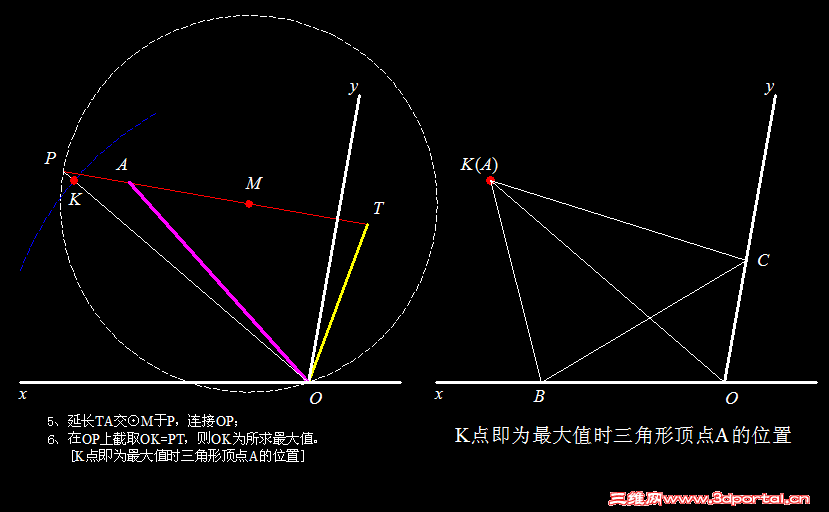
9 }; m, J) @+ t- _; b, a" R
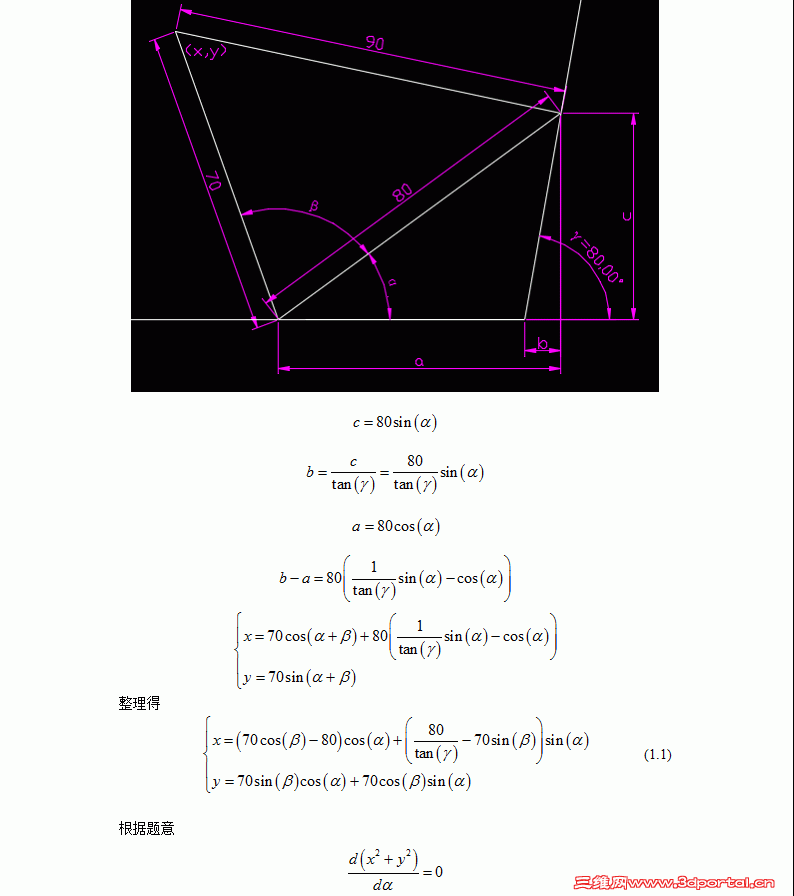
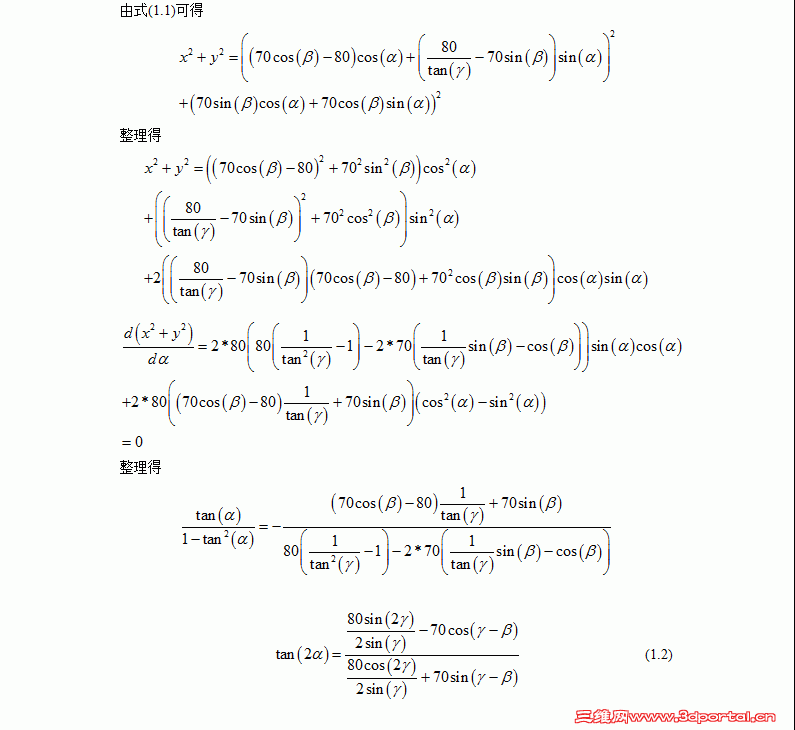
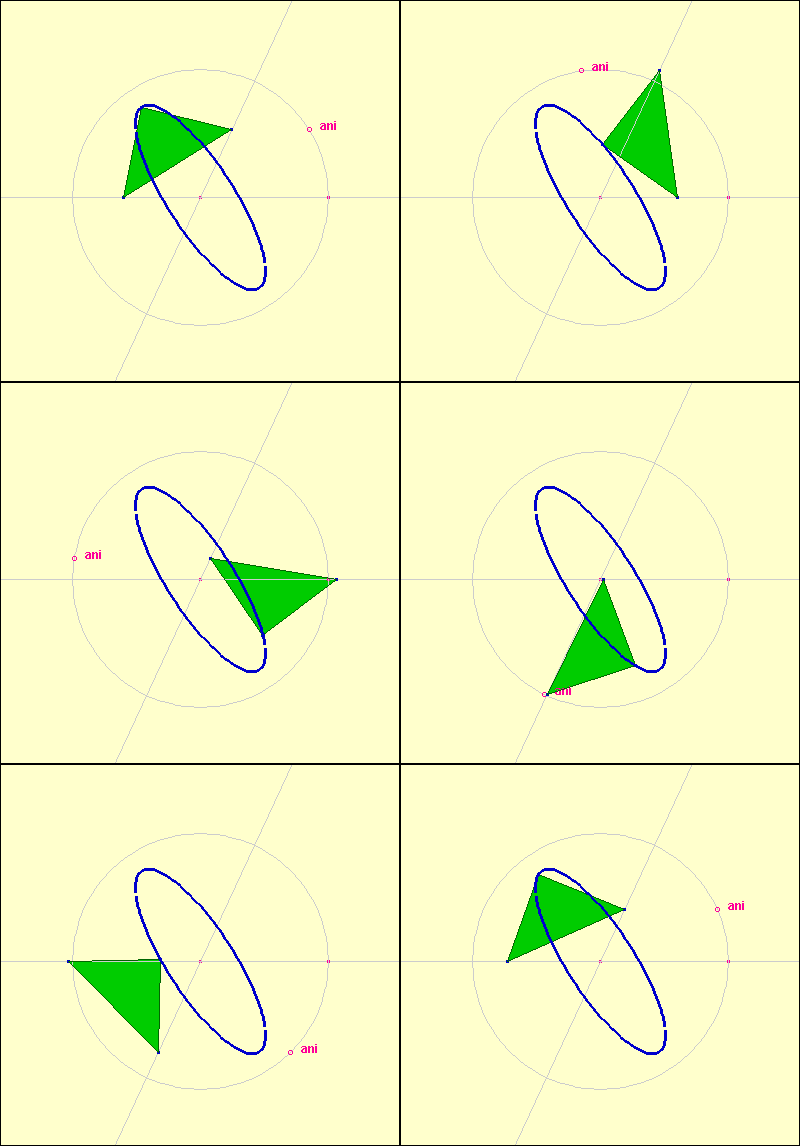
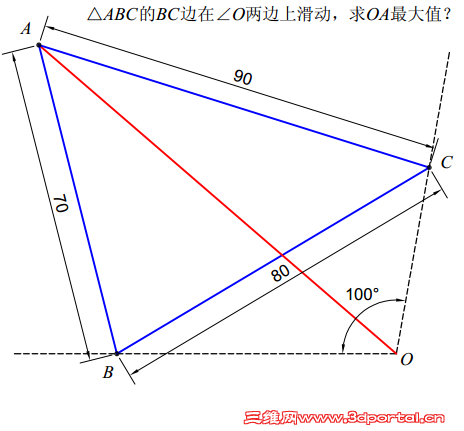
( G; f: D0 D, }7 M5 y* y作图依据:(更正:△ABC的BC边在∠O两边上运动时,其顶点A的轨迹是以O为中心的椭圆,)
: I+ Y& @9 [1 ~0 I# i3 X# K# J$ t" t' R% l' W5 ^* m
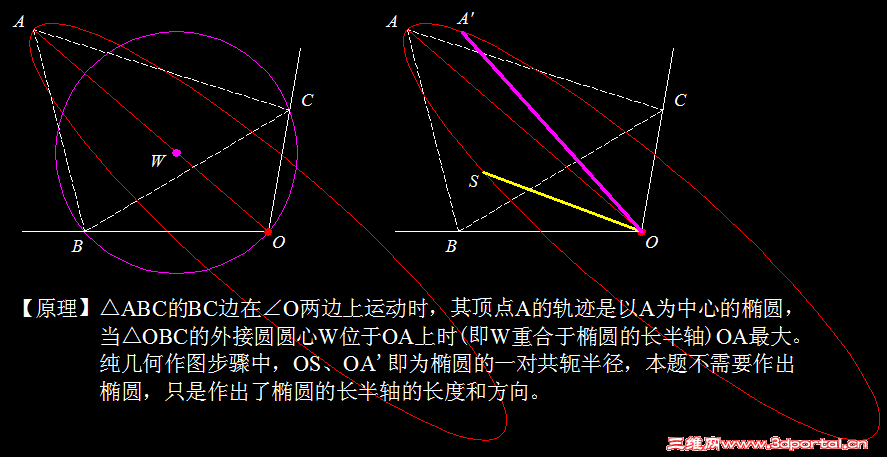
8 u& e% F' u, h: {5 J4 J
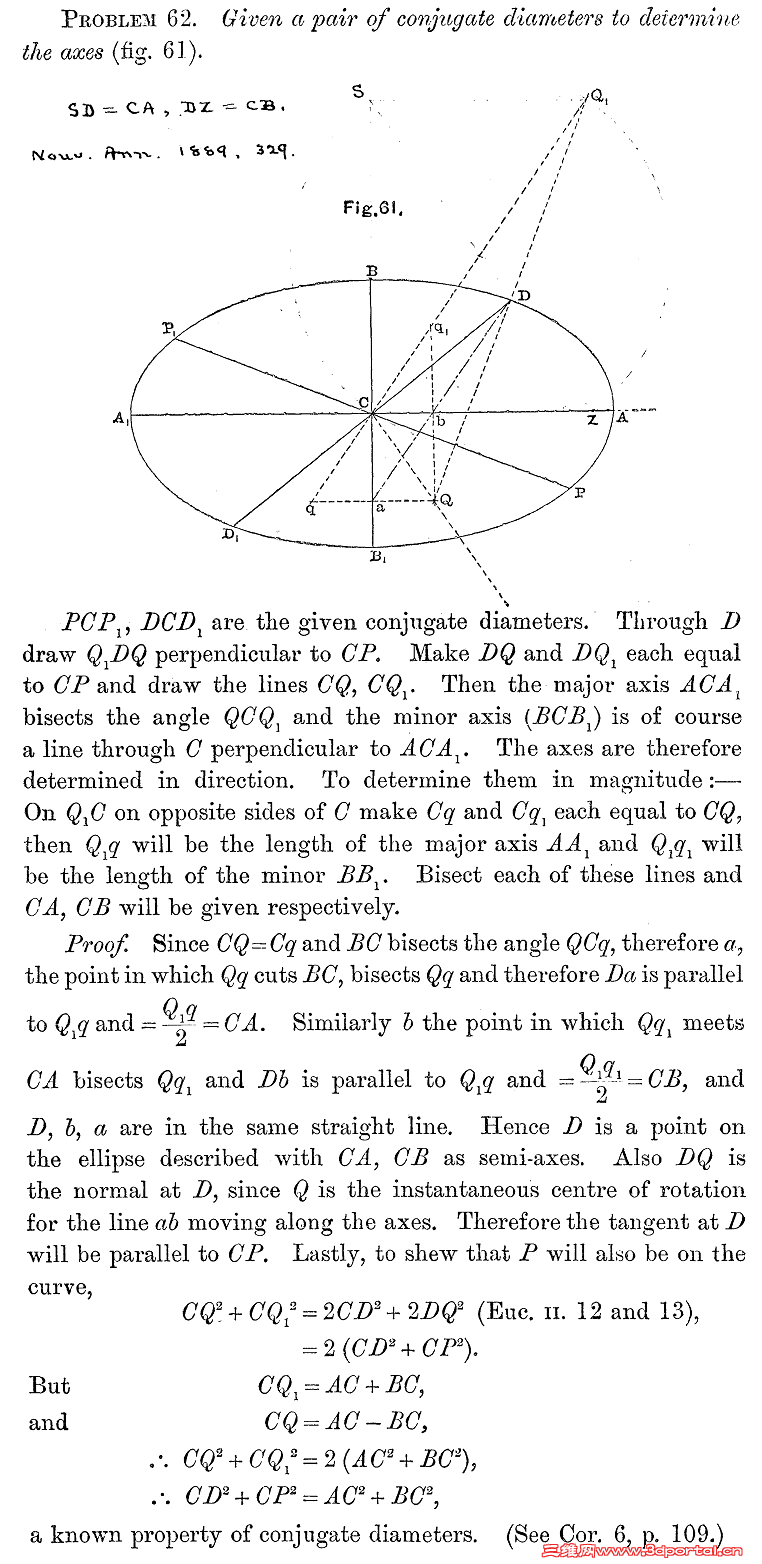
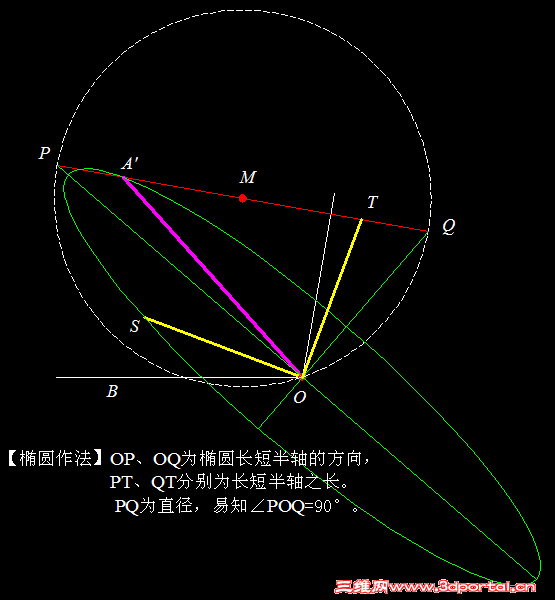
& B. Q) ]$ i3 w3 A; ?. \CAD椭圆作法:8 x' `9 U; `3 I/ t; J+ q
. d& C8 }2 s& w: R/ g9 ?5 \
* _+ t1 z& K- d$ b1 f/ i
0 c+ a0 K, L' f
1 |& F8 T, b3 R+ W2 c( n |
评分
-
查看全部评分
|








 发表于 2015-1-10 01:59:48
 发表于 2015-1-10 09:42:43
 发表于 2015-1-11 19:55:27